In an era where digital advertising is a battlefield, having the right tools to navigate through this complex landscape can make all the difference. Enter Go Beaver AI—a platform designed to empower marketers with advanced ad intelligence capabilities that promise to take competitor analysis to new heights. This review delves into the intricate features and user experience of Go Beaver AI, helping you determine if it’s the right fit for your advertising strategy.
*Unveiling Go Beaver AI's Capabilities in Ad Intelligence**
Go Beaver AI sets itself apart with its robust suite of ad intelligence tools tailored for businesses eager to outmaneuver their competition. The platform harnesses the power of artificial intelligence to sift through vast amounts of ad data, providing users with actionable insights that were once difficult to attain. By analyzing competitors’ tactics, creatives, and spending patterns, it equips marketers with a keen understanding of market trends and consumer behavior.
Imagine being able to peek behind the curtain of your rivals' advertising strategies—this is precisely what Go Beaver offers. From uncovering which ads are performing best to identifying gaps in your own campaigns, this tool aims to transform how marketers approach their ad efforts.
*Key Tools for Competitor Analysis**
Diving deeper into its offerings reveals a treasure trove of features designed specifically for competitor analysis:
1. **Ad Library:** A comprehensive database showcasing active ads from various industries allows users to explore creative formats, messaging, and calls-to-action employed by competitors.
2. **Performance Metrics:** Users can access detailed analytics on ad performance metrics such as engagement rates and conversions, enabling a data-driven approach when refining campaigns.
3. **Trend Analysis:** Stay ahead of the curve with insights into emerging trends within specific niches or demographics; this feature enables marketers to pivot strategies proactively rather than reactively.
4. **Budget Insights:** Understanding where competitors allocate their budgets helps in crafting competitive bids while optimizing resource allocation effectively.
5. **Alert System:** With customizable alerts for significant changes or new entries in competitor activity, you’ll never miss an opportunity—or a threat—in your industry landscape.
*Navigating the Interface and Insights**
Go Beaver AI boasts an intuitive user interface that facilitates easy navigation through its myriad features. Upon logging in, users are greeted with a clean dashboard that showcases key metrics at a glance—perfect for those who want immediate insights without sifting through endless data points.
The simplicity doesn’t compromise depth; each tool provides drill-down capabilities allowing users to investigate specifics without feeling overwhelmed. Whether you're seasoned in digital marketing or just starting out, finding relevant information quickly becomes second nature thanks to thoughtful design choices and guided tutorials embedded throughout the platform.
*Final Thoughts: Is Go Beaver AI the Right Choice for Your Ad Strategy?**
As we wrap up our exploration of Go Beaver AI's offerings, it’s clear that this platform has positioned itself as a formidable player in the realm of ad intelligence tools. Its ability to provide comprehensive competitor analysis—coupled with user-friendly navigation—makes it appealing for businesses looking to elevate their advertising game.
However, like any tool on the market today, whether it’s right for you ultimately depends on your unique needs and goals as a marketer. If gaining deep insights into your competition sounds like something you’d benefit from—and you’re ready to leverage these insights towards actionable strategies—then Go Beaver AI might just be worth considering as part of your arsenal in conquering the ever-evolving digital advertising landscape.
Showing posts with label research. Show all posts
Showing posts with label research. Show all posts
Tuesday, June 17, 2025

Navigating the Ad Landscape: Our Full Review of Go Beaver AI's Competitive Intelligence Tools
In an era where digital advertising is a battlefield, having the right tools to navigate through this complex landscape can make all the difference. Enter Go Beaver AI—a platform designed to empower marketers with advanced ad intelligence capabilities that promise to take competitor analysis to new heights. This review delves into the intricate features and user experience of Go Beaver AI, helping you determine if it’s the right fit for your advertising strategy.
*Unveiling Go Beaver AI's Capabilities in Ad Intelligence**
Go Beaver AI sets itself apart with its robust suite of ad intelligence tools tailored for businesses eager to outmaneuver their competition. The platform harnesses the power of artificial intelligence to sift through vast amounts of ad data, providing users with actionable insights that were once difficult to attain. By analyzing competitors’ tactics, creatives, and spending patterns, it equips marketers with a keen understanding of market trends and consumer behavior.
Imagine being able to peek behind the curtain of your rivals' advertising strategies—this is precisely what Go Beaver offers. From uncovering which ads are performing best to identifying gaps in your own campaigns, this tool aims to transform how marketers approach their ad efforts.
*Key Tools for Competitor Analysis**
Diving deeper into its offerings reveals a treasure trove of features designed specifically for competitor analysis:
1. **Ad Library:** A comprehensive database showcasing active ads from various industries allows users to explore creative formats, messaging, and calls-to-action employed by competitors.
2. **Performance Metrics:** Users can access detailed analytics on ad performance metrics such as engagement rates and conversions, enabling a data-driven approach when refining campaigns.
3. **Trend Analysis:** Stay ahead of the curve with insights into emerging trends within specific niches or demographics; this feature enables marketers to pivot strategies proactively rather than reactively.
4. **Budget Insights:** Understanding where competitors allocate their budgets helps in crafting competitive bids while optimizing resource allocation effectively.
5. **Alert System:** With customizable alerts for significant changes or new entries in competitor activity, you’ll never miss an opportunity—or a threat—in your industry landscape.
*Navigating the Interface and Insights**
Go Beaver AI boasts an intuitive user interface that facilitates easy navigation through its myriad features. Upon logging in, users are greeted with a clean dashboard that showcases key metrics at a glance—perfect for those who want immediate insights without sifting through endless data points.
The simplicity doesn’t compromise depth; each tool provides drill-down capabilities allowing users to investigate specifics without feeling overwhelmed. Whether you're seasoned in digital marketing or just starting out, finding relevant information quickly becomes second nature thanks to thoughtful design choices and guided tutorials embedded throughout the platform.
*Final Thoughts: Is Go Beaver AI the Right Choice for Your Ad Strategy?**
As we wrap up our exploration of Go Beaver AI's offerings, it’s clear that this platform has positioned itself as a formidable player in the realm of ad intelligence tools. Its ability to provide comprehensive competitor analysis—coupled with user-friendly navigation—makes it appealing for businesses looking to elevate their advertising game.
However, like any tool on the market today, whether it’s right for you ultimately depends on your unique needs and goals as a marketer. If gaining deep insights into your competition sounds like something you’d benefit from—and you’re ready to leverage these insights towards actionable strategies—then Go Beaver AI might just be worth considering as part of your arsenal in conquering the ever-evolving digital advertising landscape.
*Unveiling Go Beaver AI's Capabilities in Ad Intelligence**
Go Beaver AI sets itself apart with its robust suite of ad intelligence tools tailored for businesses eager to outmaneuver their competition. The platform harnesses the power of artificial intelligence to sift through vast amounts of ad data, providing users with actionable insights that were once difficult to attain. By analyzing competitors’ tactics, creatives, and spending patterns, it equips marketers with a keen understanding of market trends and consumer behavior.
Imagine being able to peek behind the curtain of your rivals' advertising strategies—this is precisely what Go Beaver offers. From uncovering which ads are performing best to identifying gaps in your own campaigns, this tool aims to transform how marketers approach their ad efforts.
*Key Tools for Competitor Analysis**
Diving deeper into its offerings reveals a treasure trove of features designed specifically for competitor analysis:
1. **Ad Library:** A comprehensive database showcasing active ads from various industries allows users to explore creative formats, messaging, and calls-to-action employed by competitors.
2. **Performance Metrics:** Users can access detailed analytics on ad performance metrics such as engagement rates and conversions, enabling a data-driven approach when refining campaigns.
3. **Trend Analysis:** Stay ahead of the curve with insights into emerging trends within specific niches or demographics; this feature enables marketers to pivot strategies proactively rather than reactively.
4. **Budget Insights:** Understanding where competitors allocate their budgets helps in crafting competitive bids while optimizing resource allocation effectively.
5. **Alert System:** With customizable alerts for significant changes or new entries in competitor activity, you’ll never miss an opportunity—or a threat—in your industry landscape.
*Navigating the Interface and Insights**
Go Beaver AI boasts an intuitive user interface that facilitates easy navigation through its myriad features. Upon logging in, users are greeted with a clean dashboard that showcases key metrics at a glance—perfect for those who want immediate insights without sifting through endless data points.
The simplicity doesn’t compromise depth; each tool provides drill-down capabilities allowing users to investigate specifics without feeling overwhelmed. Whether you're seasoned in digital marketing or just starting out, finding relevant information quickly becomes second nature thanks to thoughtful design choices and guided tutorials embedded throughout the platform.
*Final Thoughts: Is Go Beaver AI the Right Choice for Your Ad Strategy?**
As we wrap up our exploration of Go Beaver AI's offerings, it’s clear that this platform has positioned itself as a formidable player in the realm of ad intelligence tools. Its ability to provide comprehensive competitor analysis—coupled with user-friendly navigation—makes it appealing for businesses looking to elevate their advertising game.
However, like any tool on the market today, whether it’s right for you ultimately depends on your unique needs and goals as a marketer. If gaining deep insights into your competition sounds like something you’d benefit from—and you’re ready to leverage these insights towards actionable strategies—then Go Beaver AI might just be worth considering as part of your arsenal in conquering the ever-evolving digital advertising landscape.
Saturday, December 21, 2024
Selecting the Right Program for Losing Weight: Helpful Hints
Starting a journey to lose weight can be both challenging and rewarding. With so many diet plans to choose from, it can be challenging to sort through the plethora of choices to find the one that suits your preferences and goals. In this guide, we will explore valuable advice and strategies to help you choose the best plan for weight loss designed for your daily routine and personal tastes.
Defining your objectives is the first crucial step in choosing a plan that fits your targets. Whether you aim to drop a few pounds for an special day or are dedicated to making lasting habit transformations, being clear on what you wish to accomplish will assist you in choosing the right option.
Exploring different diet strategies is important to learn about the different methods on offer. From mainstream commercial programs to doctor-approved plans, each option has its distinct qualities and benefits. Take the time to read reviews, assess expenses, and get familiar with the concepts behind each option before deciding.
When judging the success of a program and health considerations, consider factors such as track records, participant feedback, and scientific evidence validating the method. Look for plans that focus on slow and steady weight loss rather than promising quick fixes or unrealistic outcomes. Well-being should always be a primary concern when selecting a weight loss program, so confirm that any option you select is monitored by trained specialists.
Discovering the ideal option for your personal habits is critical to sticking with a diet plan in the future. Consider your daily commitments, dietary preferences, exercise habits, and support system when picking a program. If you are always on the go, choose a plan that offers adaptability. Likewise, if you enjoy social interaction, seek out options that provide group accountability and engagement.
Being practical is vital for staying inspired and progress on your path to weight loss. Keep in mind that healthy weight loss takes time and effort, so be kind with yourself as you advance in achieving your targets. Monitoring your improvements through frequent updates, metrics, or logging your journey can encourage continued effort and recognize small victories along the way.
In summary, picking the best weight loss program involves detailed assessment of your goals, exploration of what's on offer, evaluation of effectiveness and health considerations, checking how it fits with your lifestyle, being practical with goals, and tracking progress regularly. These steps will help you to choose wisely ideal for accomplish your goals on your weight-loss journey.
Choosing the Right Weight Loss Program: Tips and Tricks
Beginning a journey to lose weight can be both daunting and motivating. With countless diet plans on the market, it can be confusing to filter through the sea of options to find the one that matches your requirements and aspirations. In this guide, we will dive into valuable hints and suggestions to help you choose the best plan for weight loss tailored to your way of living and preferences.
Clarifying your goals for losing weight is the first crucial step in choosing a program that aligns with your objectives. Whether you hope to drop a few pounds for an special day or are committed to pursuing sustainable lifestyle changes, understanding what you wish to accomplish will help you in finding the best-suited option.
Researching different diet strategies is critical to gather information about the different methods out there. From popular branded plans to doctor-approved approaches, each option has its distinct qualities and benefits. Make the effort to check testimonials, evaluate prices, and understand the core ideas behind each program before making a decision.
When evaluating the success of a program and risk factors, consider factors such as track records, participant feedback, and research-backed proof validating the program. Seek options that encourage slow and steady weight loss rather than promising quick fixes or extreme changes. Safety should always be a main focus when selecting a diet plan, so ensure that any option you opt for is monitored by trained specialists.
Discovering the best match for your daily routine is essential to sticking with a weight loss program in the future. Think about your daily commitments, dietary preferences, exercise habits, and support system when picking a program. If you are always on the go, opt for a plan that includes convenience. Likewise, if you prefer team environments, look for plans that provide community support and accountability.
Setting realistic expectations is vital for keeping yourself encouraged and progress on your journey to lose weight. Remember that healthy weight loss takes time and commitment, so be patient with yourself as you advance in achieving your targets. Tracking your progress through consistent measurements, metrics, or writing things down can help you stay focused and celebrate little wins along the way.
In summary, picking the most suitable diet plan demands careful consideration of your objectives, learning about what's on offer, assessment of success rates and risk factors, assessment of compatibility with your lifestyle, having achievable targets, and keeping track of results. These steps will help you to choose wisely best suited to reach your targets on your path to losing weight.
Wednesday, August 14, 2024
The Science Behind the Resona Vibe: A Game-Changer for Chronic Pain Sufferers
Chronic pain is a debilitating condition that affects millions of people worldwide, impacting their quality of life and daily activities. For those seeking relief from this persistent discomfort, PEMF therapy has emerged as a promising solution. PEMF stands for Pulsed Electromagnetic Field therapy, a non-invasive treatment that uses electromagnetic fields to stimulate cellular repair and promote healing in the body.
The Resona Vibe Portable PEMF device is one such innovation in the field of pain management, offering a convenient and effective way to alleviate chronic pain. But just how effective is this device in providing relief to those suffering from ongoing discomfort? Let's delve into the science behind the Resona Vibe and explore its potential as a game-changer for chronic pain sufferers.
Understanding Chronic Pain and PEMF Therapy
Chronic pain can result from various underlying conditions such as arthritis, fibromyalgia, or injury. Unlike acute pain that typically subsides with time, chronic pain persists for an extended period, often leading to physical and emotional distress. Traditional treatments like medication or physical therapy may provide temporary relief but often fall short in addressing the root cause of the pain.
PEMF therapy works on a cellular level by delivering electromagnetic pulses to affected areas, stimulating blood flow, reducing inflammation, and promoting tissue regeneration. By targeting the source of pain at its core, PEMF therapy offers a holistic approach to managing chronic discomfort without relying solely on medications.
The Technology Behind Resona Vibe Portable PEMF Device
The Resona Vibe Portable PEMF device harnesses cutting-edge technology to deliver precise electromagnetic pulses to targeted areas of the body. Its portable design allows users to experience on-the-go pain relief whenever needed, making it a convenient option for those with active lifestyles or limited mobility.
Equipped with multiple intensity settings and customizable programs, the Resona Vibe caters to individual needs and preferences, ensuring a personalized treatment experience for each user. Its user-friendly interface makes it easy to operate, even for those new to PEMF therapy.
Real-Life Success Stories: Users Share Their Experiences
Many users have reported significant improvements in their chronic pain symptoms after using the Resona Vibe Portable PEMF device. From reduced joint stiffness to increased mobility and overall well-being, these firsthand accounts highlight the transformative power of PEMF therapy in managing long-term discomfort.
Clinical Studies and Research on Resona Vibe
Numerous clinical studies have demonstrated the efficacy of pemf therapy in relieving chronic pain and promoting healing. Research on the Resona Vibe specifically has shown promising results in various conditions such as osteoarthritis, back pain, and neuropathy. These findings underscore the scientific basis behind the device's effectiveness in addressing chronic pain at its source.
How to Use the Resona Vibe for Maximum Pain Relief
To maximize the benefits of the Resona Vibe Portable PEMF device...
The Resona Vibe Portable PEMF device is one such innovation in the field of pain management, offering a convenient and effective way to alleviate chronic pain. But just how effective is this device in providing relief to those suffering from ongoing discomfort? Let's delve into the science behind the Resona Vibe and explore its potential as a game-changer for chronic pain sufferers.
Understanding Chronic Pain and PEMF Therapy
Chronic pain can result from various underlying conditions such as arthritis, fibromyalgia, or injury. Unlike acute pain that typically subsides with time, chronic pain persists for an extended period, often leading to physical and emotional distress. Traditional treatments like medication or physical therapy may provide temporary relief but often fall short in addressing the root cause of the pain.
PEMF therapy works on a cellular level by delivering electromagnetic pulses to affected areas, stimulating blood flow, reducing inflammation, and promoting tissue regeneration. By targeting the source of pain at its core, PEMF therapy offers a holistic approach to managing chronic discomfort without relying solely on medications.
The Technology Behind Resona Vibe Portable PEMF Device
The Resona Vibe Portable PEMF device harnesses cutting-edge technology to deliver precise electromagnetic pulses to targeted areas of the body. Its portable design allows users to experience on-the-go pain relief whenever needed, making it a convenient option for those with active lifestyles or limited mobility.
Equipped with multiple intensity settings and customizable programs, the Resona Vibe caters to individual needs and preferences, ensuring a personalized treatment experience for each user. Its user-friendly interface makes it easy to operate, even for those new to PEMF therapy.
Real-Life Success Stories: Users Share Their Experiences
Many users have reported significant improvements in their chronic pain symptoms after using the Resona Vibe Portable PEMF device. From reduced joint stiffness to increased mobility and overall well-being, these firsthand accounts highlight the transformative power of PEMF therapy in managing long-term discomfort.
Clinical Studies and Research on Resona Vibe
Numerous clinical studies have demonstrated the efficacy of pemf therapy in relieving chronic pain and promoting healing. Research on the Resona Vibe specifically has shown promising results in various conditions such as osteoarthritis, back pain, and neuropathy. These findings underscore the scientific basis behind the device's effectiveness in addressing chronic pain at its source.
How to Use the Resona Vibe for Maximum Pain Relief
To maximize the benefits of the Resona Vibe Portable PEMF device...
Tuesday, July 9, 2024
The Pitfalls of Open Source Research
Open source research, often called OSINT, is a valuable tool for understanding global events. However, it has its own challenges and risks. This post examines the usual missteps that can undermine the credibility and effectiveness of open-source investigation, particularly in the environment of fast-moving worldwide events.
Failing to Link to the Original Source One of the basic rules of OSINT is transparency. The content should be publicly accessible and verifiable by anyone. Not linking to the original source can severely undermine the credibility of the research. During significant events, such as Russia's 2022 invasion of Ukraine, many OSINT handles on social media platforms like Twitter shared videos without linking to the original source. This oversight took away essential metadata, making confirming details harder. Researchers must always link to the original sources to maintain transparency and verifiability.
Permitting Advocacy to Affect Your Investigation Bias can significantly compromise open-source research. Researchers often succumb to confirmation bias, where they favor information that supports their pre-existing beliefs. This can cause one-sided reporting and erroneous data analysis. It is essential for researchers to recognize their biases and aim for objectivity. Admitting uncertainties and gaps in knowledge is vital for upholding the research's integrity.
Failing to Archive Content Online content is ephemeral. Websites shut down, links fail, and social media posts get deleted. Keeping records is vital in open-source investigation to guarantee significant content is saved. Tools like the Internet Archive's Wayback Machine are vital for preservation. However, these tools sometimes don't save content, especially from dynamic social media platforms. Researchers should utilize screenshots and various archiving practices to make sure crucial information is saved.
Missing Context in Events Occurrences are often misinterpreted without proper context. This is particularly true in tracking conflicts. Researchers unfamiliar with specific information might mistake normal occurrences for major events. For example, controlled fires might be mistaken for malicious activities. Knowing the context is vital for proper understanding. Domain-specific expertise is often necessary to distinguish between ordinary and extraordinary events.
Misusing OSINT Tools Open-source research tools require proper training and experience to use effectively. Misuse of these tools can cause inaccurate results. For instance, facial recognition software and tools for detecting photo manipulation have boundaries. Without proper understanding and cautious interpretation, these tools can produce incorrect findings. Researchers need comprehensive training for correct tool usage and should always verify results with extra data.
Editing Footage Changing videos can hide essential details, making verification difficult. Practices like inserting audio, creating montages, or applying watermarks can hinder the process of understanding and verifying content. For example, watermarks can complicate reverse image searching, a technique used to trace the origin of footage. Researchers should avoid editing footage in ways that obscure important details and damage the clip's credibility.
Racing to be First at Any Cost In the age of social media, there is immense pressure to be the first to report breaking news. This rush can result in blunders and false conclusions. High-profile misidentifications during events like the Boston Marathon bombings highlight the dangers of prioritizing speed over accuracy. Verification should always be prioritized over speed. Researchers should resist the urge to rush and emphasize giving precise, validated details.
Final Thoughts Open source investigation is a important method, but it must be conducted with care and diligence. Researchers must steer clear of usual mistakes such as failing to provide original sources, letting biases cloud judgment, neglecting archiving, lacking context, misusing tools, editing footage improperly, and rushing to be first. By adhering to principles of transparency, objectivity, and thorough verification, researchers can keep the trustworthiness and success of their research. These practices are vital for building trust and reliability in OSINT.
This post offers a detailed view of the risks in open-source investigation and offers guidelines for avoiding these common mistakes. By following these best practices, researchers can improve the quality and trustworthiness of their work, contributing to a more informed and accurate understanding of global events.
The Risks of Open Source Research
OSINT (Open Source Intelligence), often known as OSINT, is a important way to comprehend worldwide occurrences. However, it comes with its own set of challenges and pitfalls. This article delves into the common mistakes that can undermine the credibility and effectiveness of open-source investigation, particularly in the environment of fast-moving worldwide events.
Not Providing the Original Source One of the basic rules of OSINT is transparency. The content should be available for public verification. Omitting the original source can greatly damage the trustworthiness of the research. During major occurrences, such as Russia's invasion of Ukraine in 2022, many OSINT accounts on social media platforms like Twitter uploaded videos without citing the original sources. This oversight took away essential metadata, making verification difficult. It's crucial for researchers to always link to the original sources to maintain transparency and verifiability.
Allowing Bias to Compromise Your Research Bias is a major threat to the integrity of open-source investigation. Researchers often get caught in the web of confirmation bias, where they prefer data that aligns with their beliefs. This can lead to selective reporting and misinterpretation of data. It is important for researchers to be aware of their biases and work towards objectivity. Acknowledging unknowns and information gaps is key to preserving the research's credibility.
Neglecting to Preserve Material Digital content is fleeting. Websites disappear, links break, and social media posts get deleted. Keeping records is vital in open-source investigation to make sure important data is kept. Tools like the Internet Archive's Wayback Machine are essential for archiving. However, these tools sometimes miss data, especially from dynamic social media platforms. Researchers should utilize screenshots and various archiving practices to guarantee essential content is kept.
Missing Context in Events Occurrences are often misinterpreted without proper context. This is particularly true in observing disputes. Researchers unfamiliar with specific data might mistake normal occurrences for major events. For example, controlled fires might be mistaken for malicious activities. Grasping the context is vital for proper understanding. Specialized understanding is often needed to differentiate common occurrences from special incidents.
Incorrectly Using Open Source Research Tools OSINT tools require proper training and experience to use effectively. Misuse of these tools can lead to incorrect conclusions. For instance, facial recognition software and tools for detecting photo manipulation have boundaries. Without proper comprehension and prudent evaluation, these tools can generate misleading results. Researchers need detailed training for proper tool application and should always cross-check outcomes with other information.
Modifying Clips Changing videos can hide essential details, making verification difficult. Practices like inserting audio, creating montages, or applying watermarks can hinder the process of understanding and verifying content. For example, watermarks can complicate reverse image searching, a technique used to trace the origin of footage. Researchers should not alter clips in manners that cover critical data and weaken the video's authenticity.
Racing to be First at Any Cost In the age of social media, there is immense pressure to be the first to report breaking news. This rush can cause errors and wrong judgments. High-profile misidentifications during events like the Boston Marathon incident show the risks of valuing speed over correctness. Verification should always come before being the first. Researchers should fight the temptation to hurry and emphasize giving precise, validated details.
Final Thoughts Open source investigation is a powerful tool, but it must be conducted with care and diligence. Researchers must steer clear of usual mistakes such as not linking to original sources, allowing bias to interfere, forgetting to archive, missing context, mishandling tools, wrongly editing footage, and hurrying to be first. By adhering to principles of transparency, objectivity, and thorough verification, researchers can maintain the credibility and effectiveness of their work. These practices are important for ensuring trust and credibility in open-source work.
This piece gives a thorough look at the dangers in OSINT and offers guidelines for avoiding these common mistakes. By following these best practices, researchers can boost the effectiveness and credibility of their research, helping achieve a clearer and more precise comprehension of worldwide occurrences.
Sunday, December 5, 2021
Keyword Atlas — My Best Keyword Research Tool for 2021
Hi this is Rudy from SEO lush and here is my Keyword Atlas review and tutorial.

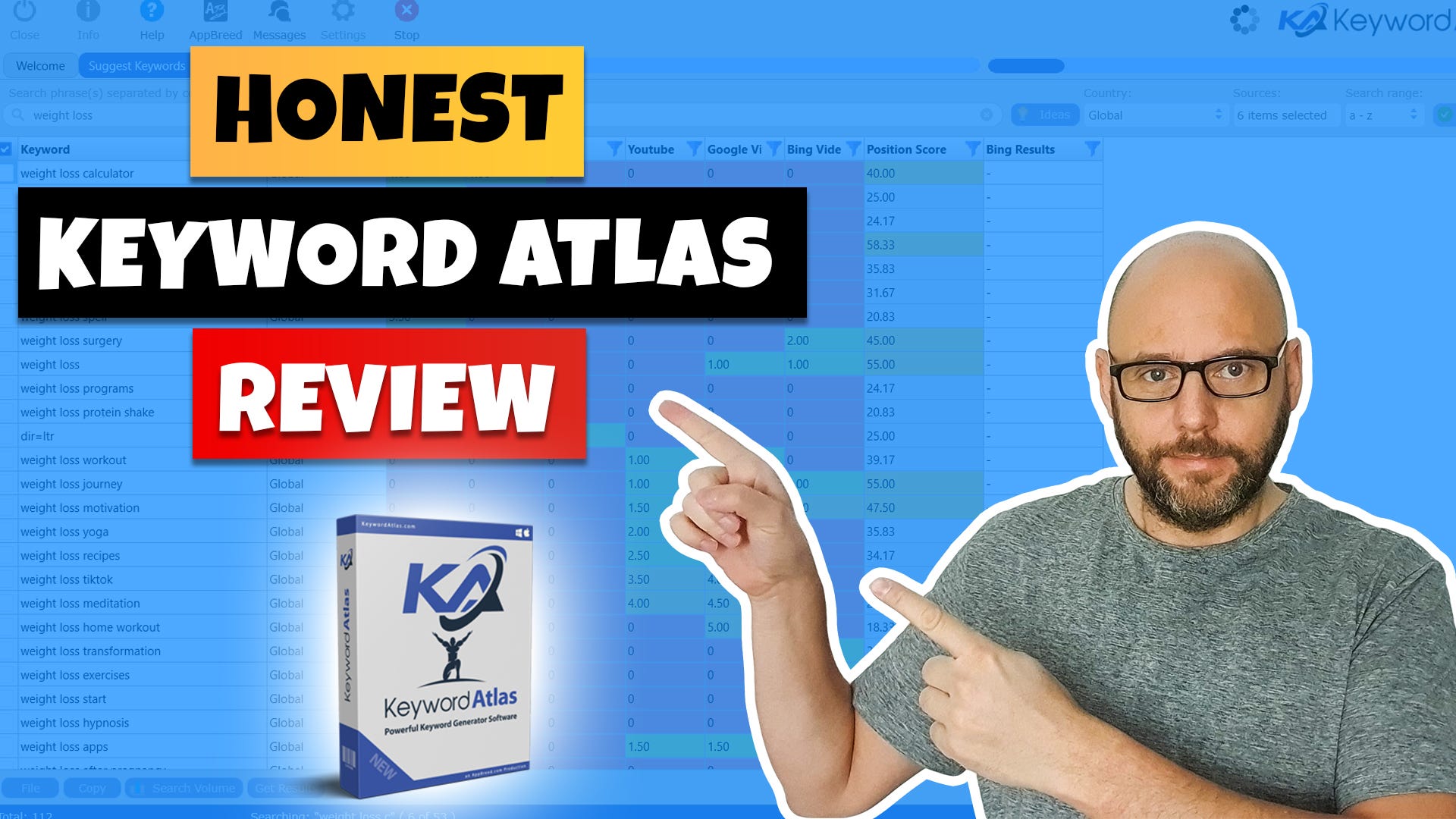
Today i’m gonna be talking about Keyword Atlas, its features and why it became my number one tool for all my keyword research needs.
But before I get into it, here is a link to Keyword Atlas with my special discount where you can grab it for 37 dollars which is 10 bucks cheaper than on the official sales page. Feel free to check it out.
CLICK HERE TO GET THE SPECIAL DISCOUNT NOW!
So what is Keyword Atlas?
Keyword Atlas is a new keyword idea and long tail keyword generator.
But not only that. Keyword Atlas will give you a lot of valuable informations about these keywords like estimated monthly search volume or keyword competition.
Keyword atlas is scraping autosuggest keywords that you see when you go and type in a keyword.

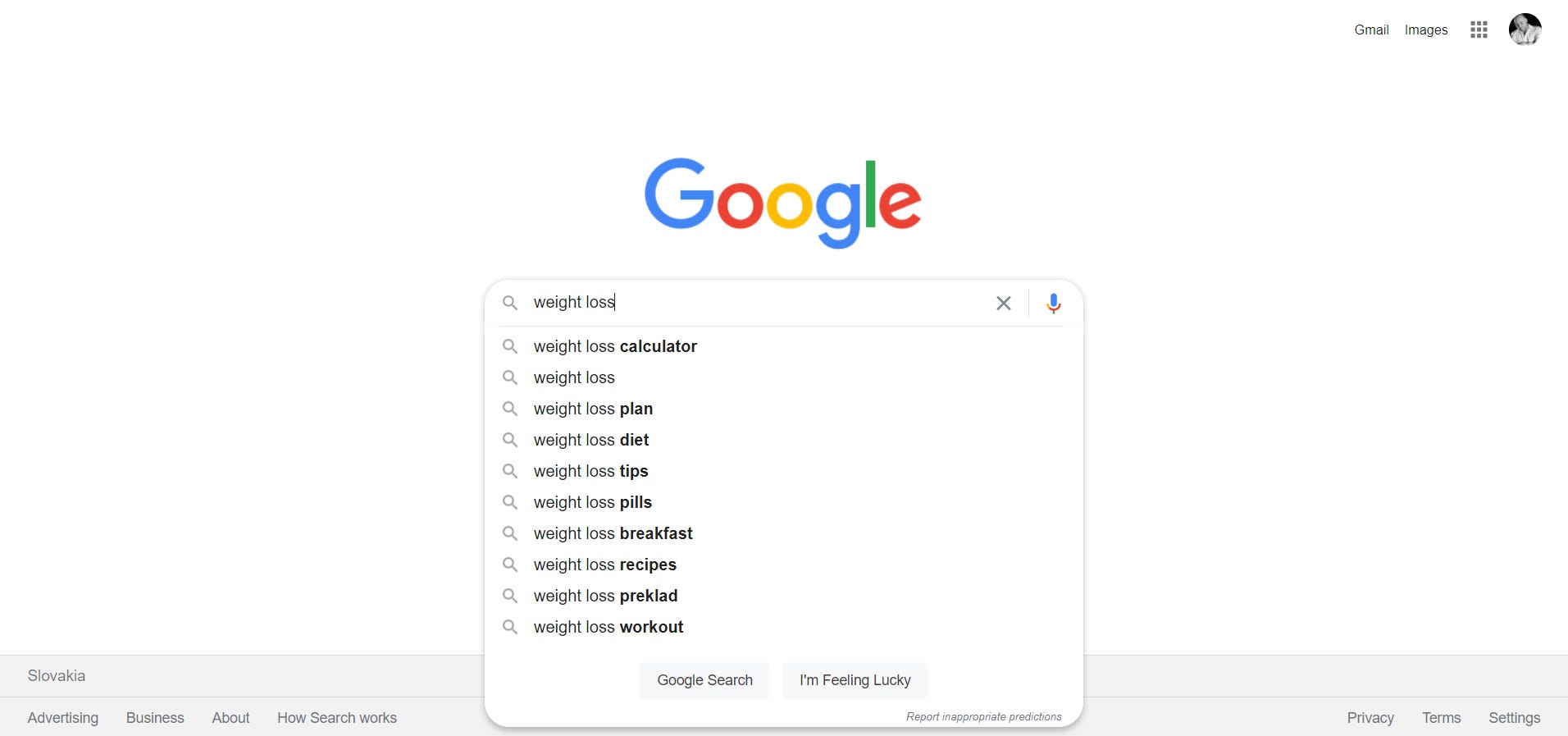
These are great keywords to add to your list. Why?
Because if Google suggests a keyword, you know that lots of people are searching for it.
Why is Keyword Atlas so much better than most keyword research tools?
Most keyword tools only give you seaarch volume and competition data or a ranking difficulty score.
There are many keyword research tools on the market but most of them require monthly fee. You can get Keyword Atlas for one time payment.
Check the top of the page for my private link with Keyword Atlas Discount.
Keyword Atlas gives you low competition trending keywords from 23 major online websites including seven major top search engines, eight major e-commerce outlets, four video hosting platforms even google play and wikipedia.
But not only that. With Keyword Atlas you will get access to a unique proprietary formula that tells you exactly which keywords are the most important across all of those sources.
What is Keyword Atlas used for?
Keyword Atlas is handy for keyword research.
- You can use these keywords as titles for your youtube videos created with mass video marketing tools like YIVE.
CLICK HERE TO GET MORE INFO ABOUT MASS VIDEO MARKETING.
Or You can use keywords generated with Keyword Atlas for :
- blog posts
- new niche video or YouTube channel ideas
- facebook ads
- google shopping
- and much more
If you’re looking for the Swiss Army knife of keyword tools and have no monthly fees Keyword Atlas is the best tool for you.
Keyword Atlas tutorial
Now i will show you a quick start tutorial.

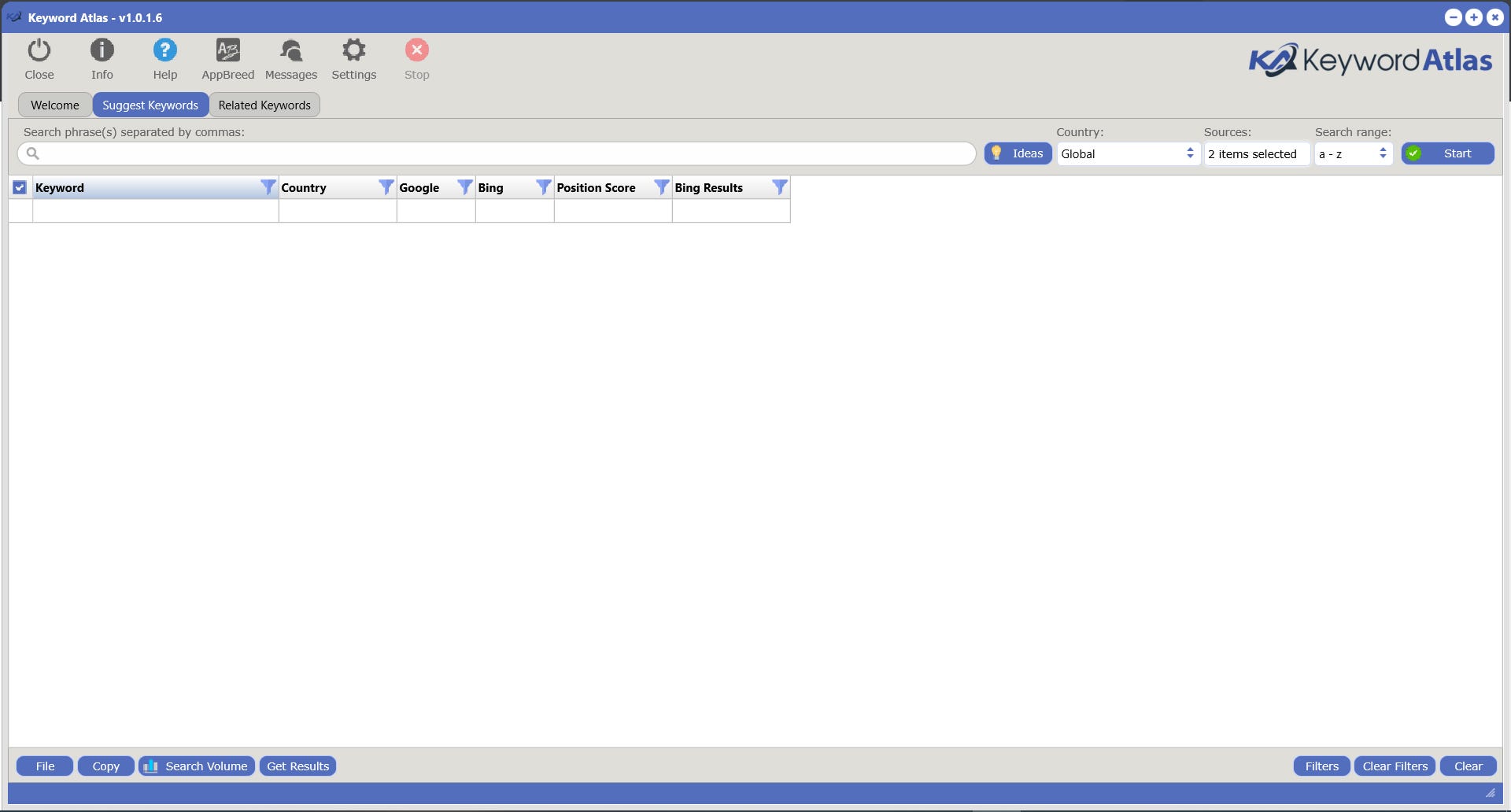
Here this is the main screen where you enter in the niche keywords. I’m not going to show you all the options because they will take a long time but these are the most important and interesting options you can use.
- Country i use global in most cases and in some cases I use United States
- Source Here are the major top search engines, eight major e-commerce outlets, four video hosting platforms even google play and wikipedia. You can use for example Ask even Yandex that’s very popular in Russia. You can include YouTube if you want and also very interesting is the play store, Pinterest and also very important are the e-commerce ones like eBay, Alibaba, Amazon.

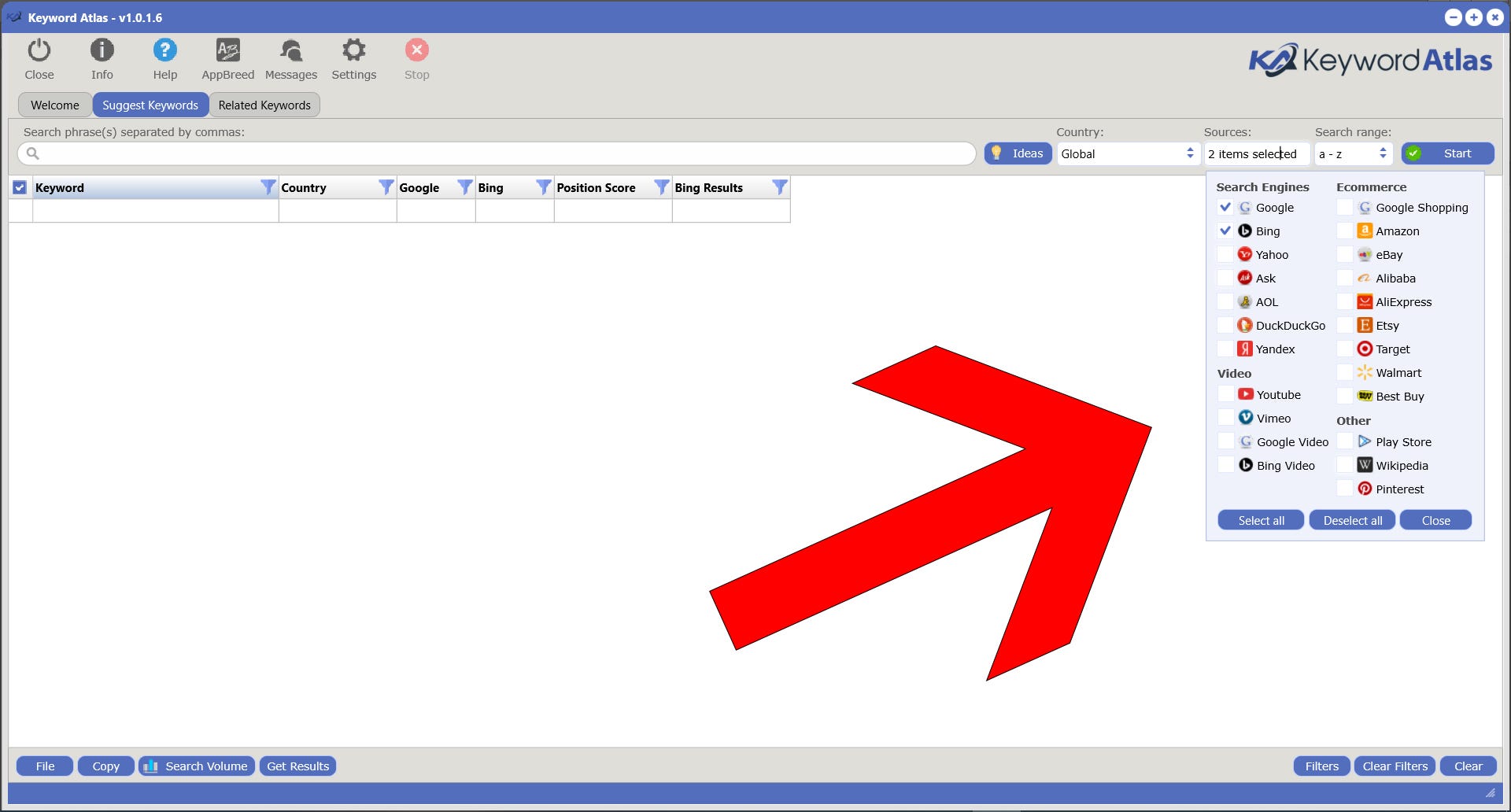
You can use all 21 if you want. But in this case i use only Google and Bing and the word “weight loss pillsâ€, because I want to sell weight loss pills for affiliate commission.


Okay so let’s press start. Keyword Atlas start continuously looking for keywords and I’m going to let it run because it will take about one to three minutes to finish. Then I’ll come back when it’s finished.

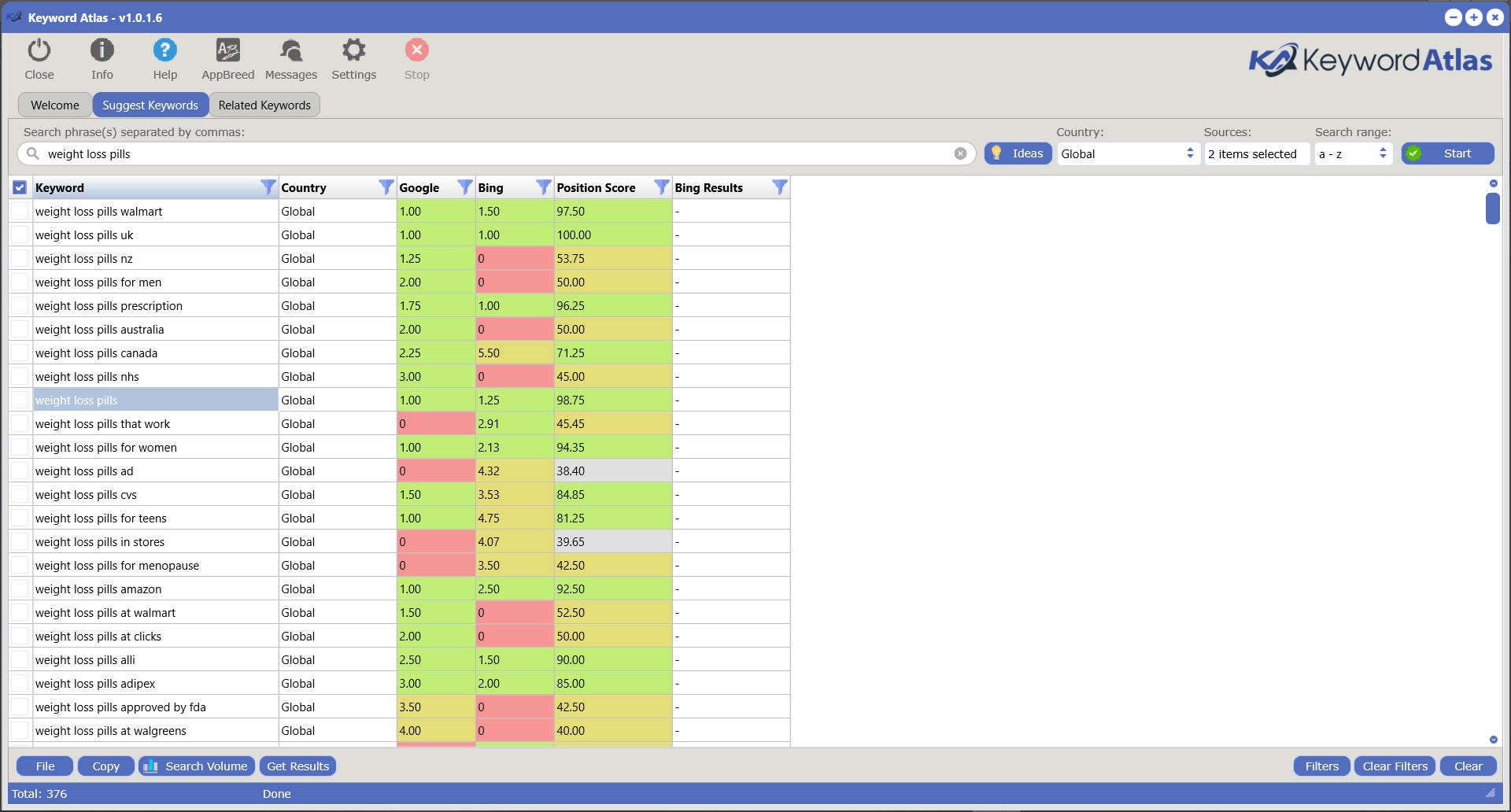
Okay so it has finished now actually it only took less than a minute. So it was pretty fast. As you can see it has found 376 keywords. You can see all these keywords in the image above, which are pretty self-explanatory.
However Keyword Atlas gives every keyword invidual score which means its the first result when you type in weight loss pills in Google orBing. keyword atlas counts the average of these it was honest number one here is number one so basically this weight loss pills keywords. This tells you that it’s very popular at the moment.
That’s a very broad quick keyword and you can’t really use that. What we’re going to do is to click on position score. What will happen now it will sort it into the most searched keywords along with all the search engines.
You can see weight loss pills vitamin shoppe is on the best positions for all because it’s number one when you type in weight loss pills. It will automatically complete it with vitamin shoppe at the end, that is the most search for keywords at this moment.
You can go down the list and you can see many other keywords you can do many many things for these keywords now.
You can get to see search volume and so on but I’m going to show you a little trick that really stands out why this tool stands out from the rest.
I’ve chosen this word “weight loss pills no caffeineâ€. Why? Because it’s something I’ve never thought about yet and it’s still pretty high on the scale (78). The top keywords are all very broad keywords and they will be hard to rank for. But this one is very interesting weight loss pills no caffeine because I want to see how much this is searched for.
So this word I looked up and as you can see it only has 30 searches a month so normally this would not be interesting for you to write about, promote or anything like that.
So it’s only 30 searches a month it says but in reality, it’s searched much much much more. So I put the keyword in to body I use that a lot for put the research for videos as you can see this keywords when you put the suggested it will suggest this keyword to body and it has a score of KU.
That means you can still rank for this keyword even though it’s dreamy popular right now so make a video about this and you have a good chance of ranking this video.
So this is what you can do with keyword Atlas for example.
Okay so yeah I’m back to the Keyword Atlas and dashboard as you can see here the exercise mat is in the top 10 of most searched keywords right at this moment so if you make it a blog post or the video right now then you have a very good chance of ranking it. And of course if you then send the traffic to any affiliate link or something else then you have a good chance of earning some money from this.
So this is how powerful keyword Atlas is and this is only a very quick tutorial to show you how powerful it is and what you can do with it.
CLICK HERE if you want to learn more and get Keyword Atlas Discount.
Keyword Atlas — My Best Keyword Research Tool for 2021
Hi this is Rudy from SEO lush and here is my Keyword Atlas review and tutorial.
Today i’m gonna be talking about Keyword Atlas, its features and why it became my number one tool for all my keyword research needs.
But before I get into it, here is a link to Keyword Atlas with my special discount where you can grab it for 37 dollars which is 10 bucks cheaper than on the official sales page. Feel free to check it out.
CLICK HERE TO GET THE SPECIAL DISCOUNT NOW!
So what is Keyword Atlas?
Keyword Atlas is a new keyword idea and long tail keyword generator.
But not only that. Keyword Atlas will give you a lot of valuable informations about these keywords like estimated monthly search volume or keyword competition.
Keyword atlas is scraping autosuggest keywords that you see when you go and type in a keyword.
These are great keywords to add to your list. Why?
Because if Google suggests a keyword, you know that lots of people are searching for it.
Why is Keyword Atlas so much better than most keyword research tools?
Most keyword tools only give you seaarch volume and competition data or a ranking difficulty score.
There are many keyword research tools on the market but most of them require monthly fee. You can get Keyword Atlas for one time payment.
Check the top of the page for my private link with Keyword Atlas Discount.
Keyword Atlas gives you low competition trending keywords from 23 major online websites including seven major top search engines, eight major e-commerce outlets, four video hosting platforms even google play and wikipedia.
But not only that. With Keyword Atlas you will get access to a unique proprietary formula that tells you exactly which keywords are the most important across all of those sources.
What is Keyword Atlas used for?
Keyword Atlas is handy for keyword research.
- You can use these keywords as titles for your youtube videos created with mass video marketing tools like YIVE.
CLICK HERE TO GET MORE INFO ABOUT MASS VIDEO MARKETING.
Or You can use keywords generated with Keyword Atlas for :
- blog posts
- new niche video or YouTube channel ideas
- facebook ads
- google shopping
- and much more
If you’re looking for the Swiss Army knife of keyword tools and have no monthly fees Keyword Atlas is the best tool for you.
Keyword Atlas tutorial
Now i will show you a quick start tutorial.
Here this is the main screen where you enter in the niche keywords. I’m not going to show you all the options because they will take a long time but these are the most important and interesting options you can use.
- Country i use global in most cases and in some cases I use United States
- Source Here are the major top search engines, eight major e-commerce outlets, four video hosting platforms even google play and wikipedia. You can use for example Ask even Yandex that’s very popular in Russia. You can include YouTube if you want and also very interesting is the play store, Pinterest and also very important are the e-commerce ones like eBay, Alibaba, Amazon.
You can use all 21 if you want. But in this case i use only Google and Bing and the word “weight loss pillsâ€, because I want to sell weight loss pills for affiliate commission.
Okay so let’s press start. Keyword Atlas start continuously looking for keywords and I’m going to let it run because it will take about one to three minutes to finish. Then I’ll come back when it’s finished.
Okay so it has finished now actually it only took less than a minute. So it was pretty fast. As you can see it has found 376 keywords. You can see all these keywords in the image above, which are pretty self-explanatory.
However Keyword Atlas gives every keyword invidual score which means its the first result when you type in weight loss pills in Google orBing. keyword atlas counts the average of these it was honest number one here is number one so basically this weight loss pills keywords. This tells you that it’s very popular at the moment.
That’s a very broad quick keyword and you can’t really use that. What we’re going to do is to click on position score. What will happen now it will sort it into the most searched keywords along with all the search engines.
You can see weight loss pills vitamin shoppe is on the best positions for all because it’s number one when you type in weight loss pills. It will automatically complete it with vitamin shoppe at the end, that is the most search for keywords at this moment.
You can go down the list and you can see many other keywords you can do many many things for these keywords now.
You can get to see search volume and so on but I’m going to show you a little trick that really stands out why this tool stands out from the rest.
I’ve chosen this word “weight loss pills no caffeineâ€. Why? Because it’s something I’ve never thought about yet and it’s still pretty high on the scale (78). The top keywords are all very broad keywords and they will be hard to rank for. But this one is very interesting weight loss pills no caffeine because I want to see how much this is searched for.
So this word I looked up and as you can see it only has 30 searches a month so normally this would not be interesting for you to write about, promote or anything like that.
So it’s only 30 searches a month it says but in reality, it’s searched much much much more. So I put the keyword in to body I use that a lot for put the research for videos as you can see this keywords when you put the suggested it will suggest this keyword to body and it has a score of KU.
That means you can still rank for this keyword even though it’s dreamy popular right now so make a video about this and you have a good chance of ranking this video.
So this is what you can do with keyword Atlas for example.
Okay so yeah I’m back to the Keyword Atlas and dashboard as you can see here the exercise mat is in the top 10 of most searched keywords right at this moment so if you make it a blog post or the video right now then you have a very good chance of ranking it. And of course if you then send the traffic to any affiliate link or something else then you have a good chance of earning some money from this.
So this is how powerful keyword Atlas is and this is only a very quick tutorial to show you how powerful it is and what you can do with it.
CLICK HERE if you want to learn more and get Keyword Atlas Discount.
Subscribe to:
Posts (Atom)